
Monitoring & Observability for Reliable Systems
Turn Monitoring and Observability into an operational backbone that exposes system behavior early and makes it more predictable. It helps in a significant reduction in recovery time, controls cloud costs, and keeps production stable as scale.
Start TransformationIncident Reduction
60% fewer production-impacting incidents
Recovery Speed
45% reduction in MTTR across critical systems
Engineering Focus
Engineering effort shifts from firefighting to delivery
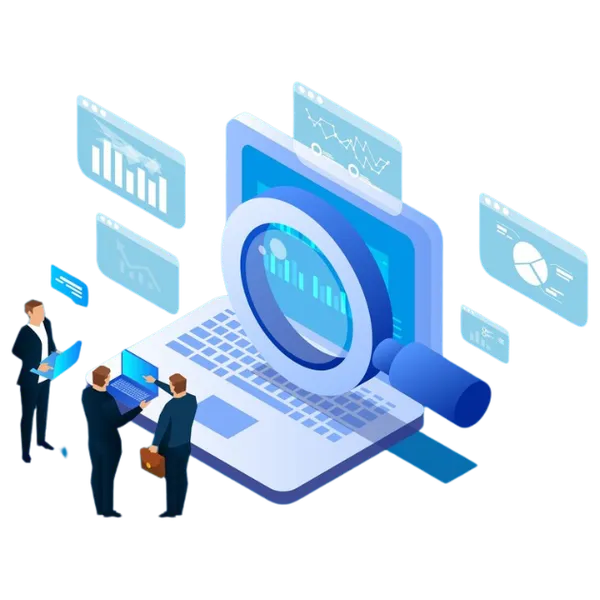
The Strategic Bottlenecks We Eliminate
Lack of Real-Time Production Observability
Early warning signals go unnoticed, allowing small system issues to grow into major outages that disrupt customers and force executive-level intervention.
Limited Visibility Into Live System Behavior
Leadership plans the activities related to scale, launches, and investments without clear visibility into system behavior. It creates blind risk across growth and reliability commitments.
No Root-Cause Visibility Drains Engineering Time
Teams repeatedly resolve outages without understanding underlying causes, so the same failures resurface across releases while senior engineers lose excessive time tracing issues instead of shipping features.
Proprietary Tooling Limits Control Over the Stack
Closed monitoring platforms tie teams to a single vendor's pricing, data format, and release cycle, making it harder to change tools, extend integrations, or move data out when needs change.
Growth Exposes Fragile Systems
As usage increases, the lack of deep visibility causes failures to surface during peak demand times. This has a direct impact on revenue and customer confidence.
No Clear Association Between Incidents and Business Impact
Technical failures are not tied to revenue, customers, or risk, leaving leadership unable to prioritize reliability work with business clarity.
How You Benefit
Lower MTTR With Deterministic Diagnosis
Incidents are detected early and diagnosed precisely using correlated signals, reducing mean time to resolution and limiting customer-facing impact.
Consistent SLA and SLO Achievement
Service-level objectives are continuously measured through real indicators, ensuring production commitments are met without last-minute firefighting or manual tracking.
Safer Releases, Minimal Business Risk
Canary deployments and feature flags are monitored in real time for controlled rollouts and fast rollback, while teams validate real user behavior during changes, preventing revenue loss from blind deployments.
AI-Native Root Cause Analysis
Anomaly detection and correlation across metrics, logs, and traces run through AI-native models trained on your system's own signal history, so alerts arrive with a likely cause and affected service attached instead of a raw threshold breach.
Faster Confidence in Scaling Decisions
Capacity, performance, and usage patterns are visible before thresholds are breached, enabling proactive scaling instead of reactive infrastructure expansion.
Engineering and Leadership Aligned on Reliability
A shared view of system health aligns engineering actions with business priorities, and since the stack runs on open source tools, data and alerting rules stay in formats your team can move, audit, or extend without a vendor contract.
Industries We Serve
SaaS
Enforce SLOs with service-level signals tied to user journeys. Detect revenue-impacting latency before customers experience degradation. Reduce MTTR by correlating deploys, traffic shifts, and cost anomalies.
FinTech
Track transactions end-to-end across payments, ledgers, and risk systems. Validate SLA compliance continuously, not just during audits. Limit blast radius through real-time dependency and failure isolation.
Healthcare
Maintain availability across clinical workflows and shared dependencies. Trace data movement to meet compliance without manual reconstruction. Resolve incidents fast without disrupting patient-critical operations.
E-commerce
Monitor checkout, inventory, and payments as a single transaction path. Detect performance regressions during traffic spikes in real time. Link infrastructure signals directly to revenue protection decisions.
Retail
Unify store, warehouse, and supply chain observability centrally. Detect POS and inventory drift before reconciliation failures occur. Control operational loss through continuous system health visibility.
IoT
Observe device fleets by firmware, region, and network behavior. Correlate telemetry failures with ingestion and cloud cost impact. Isolate failures early to prevent large-scale field incidents.
Frequently Asked Question
Get quick answers to common queries. Explore our FAQs for helpful insights and solutions.
Monitoring keeps an eye on known metrics, logs, and alarms depending on set scenarios and gives you a clear idea of what's going on in your systems.
- Observability takes a step further by letting you figure out why problems happen by comparing data from logs, metrics, and traces. Monitoring asks a simple question: Is my system working? Observability asks, Why isn't my system working? and also focuses on How can I prevent this from happening again? For full visibility, modern systems need both methods.
- DORA measures (Deployment Frequency, Lead Time, Change Failure Rate, and MTTR) are conventional ways to measure how well software is delivered.
- Companies that use DORA measurements reach their organizational performance targets twice as quickly and get their products to market 50% faster.
- These indicators serve as an effective way that lets you find problems in your delivery pipeline, compare your performance to industry norms, and plan ways to make things better. Elite performers deploy many times a day with a failure rate of less than 15% and a recovery time of less than an hour.
The monitoring and observability stack is built on open source tools such as Prometheus, Grafana, OpenTelemetry, and Loki. You keep the data and configuration in open formats, so the stack can be extended or migrated without renegotiating a vendor license.
It means anomaly detection and root cause correlation are built into the pipeline from the start, using models trained on your metrics, logs, and traces, rather than AI added on top of static dashboards after the fact.
January 24, 2025
Avoiding Metric Obsession: Balancing DORA Metrics with Broader Goals
Annavar Satish
Author

July 22, 2025
Jenkins to GitOps (GitHub + FluxCD): A DevOps Transformation Story
Hussain Gandhi
Author

January 22, 2025
The Role of Tooling and Infrastructure in Measuring DORA Metrics
Chintan Viradiya
Author



July 20, 2025
The Top 10 Golang Development Companies Powering Modern Innovation
Divya Kathiriya
Author
